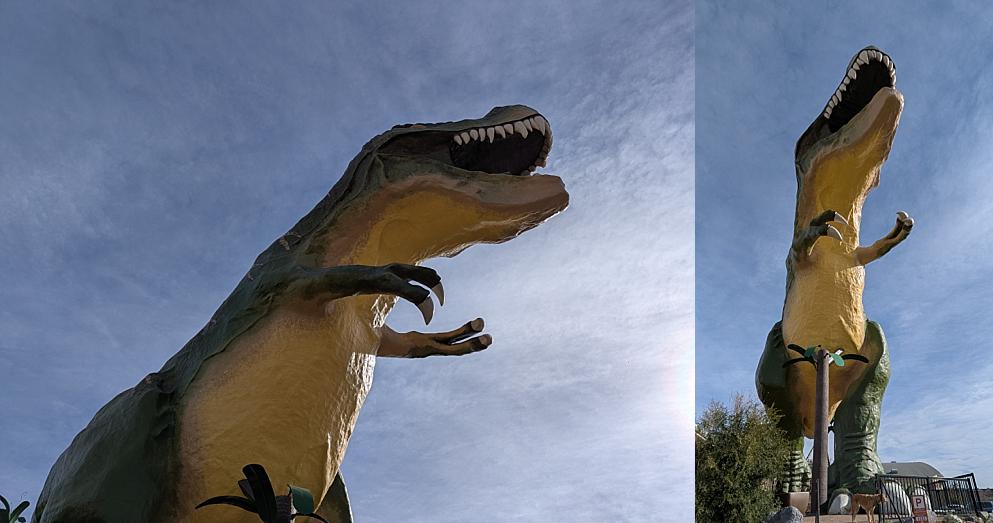
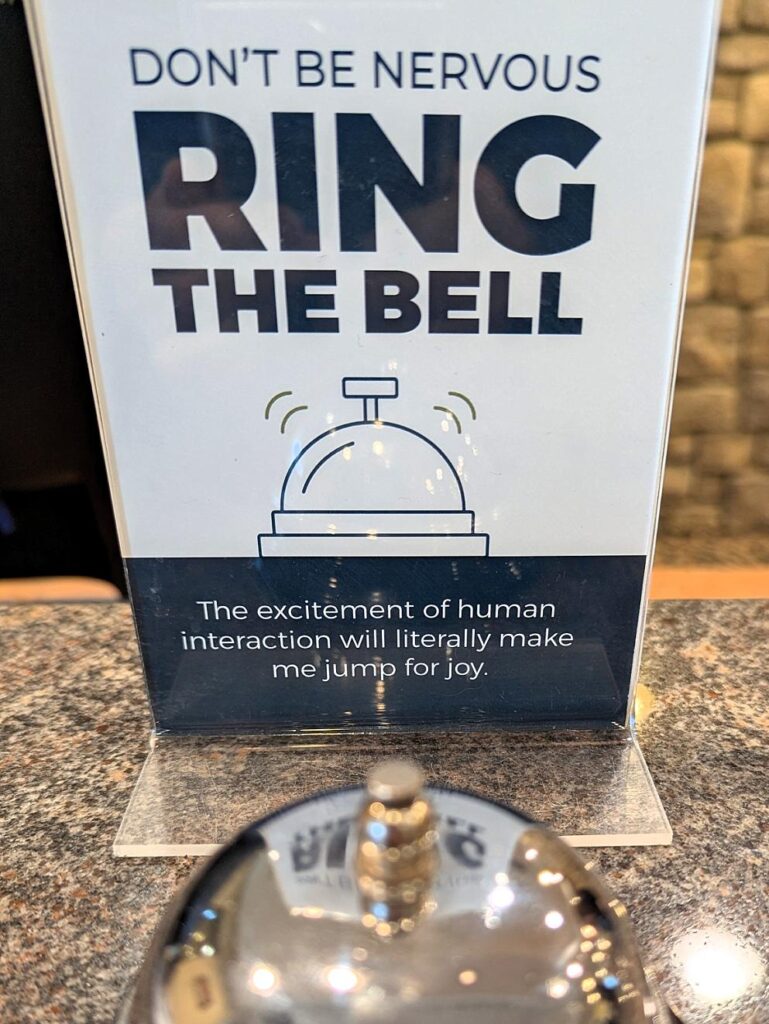
As at most 3-star hotels these days, staffing at our Drum(heller) hotel was constrained. Front-desk staff had duties other than greeting/registering guests, and were somewhere in the back. But they’d thought about the need for arrivees to get the attention of staff, and taken the opportunity to have a little fun with it. Personality rocks, especially where you don’t expect it.
 Speaking of expectations, I also found a reflection where I didn’t expect one: at the Horse Thief Canyon viewpoint-and-dirt-parking-lot about 20 minutes north-ish of the Drum.