. . . and gone tomorrow.
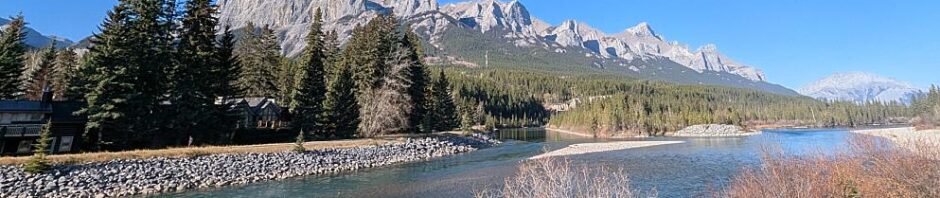
I was going to call this post Ephemera, having it in my head that the word referred to a whole class of short-lived things. I saw some clematis seed-heads in Canmore last week (which caught my eye because of my encounter with a mystery clematis in Calgary a few weeks ago) and thought I’d contrast them with the mountains also seen in and near Canmore on this same short-lived visit. After all, a delicate vine’s end-of-season seed fluff-ball and a mountain range seem like polar opposites on a few scales.


Before I got very far, though, the dictionary objected. Ephemera (per Merriam-Webster) refers to items originally meant for a *single* use (usually paper, like tickets or programs) but that have become collectibles (although, really, for homo collectoris [also known by some as homo sapiens], what *isn’t* collectible?), thereby *lasting* in some sense although not for their original purpose.
But let it not be said that I can’t move beyond the strictly literal, even though it is often true. More broadly or metaphorically (again per MW), ephemera are things of no lasting significance.
Well. No lasting significance is not at all the connotation or nuance I was looking for here. But while I was perusing synonyms, I came across the phrase Here today and gone tomorrow and although even the clematis seed-head lasts more than a day, that expression captures something closer to the slight melancholy I often feel when the world rubs my nose in the transience of life, especially as compared to geological phenomena.
As if to rub my nose in the non-ephemerality of hymns learned as a child, my subconscious then offered me this.
A thousand ages in your sight
Are like an evening gone,
Short as the watch that ends the night
Before the rising sun.
– O God, Our Help in Ages Past
It makes you wonder what else is rattling around in there. Anyway, yes, even mountain ridges are transient when viewed on a vastly different time scale than the one we normally use.
It was lovely to get back to the mountains (So glad they’re still there, eh? Hahaha.). Not surprisingly, the views are still lovely:
- from the passenger seat, through the windshield
- from a viewpoint accessible only along a hiking trail, up and up and up a hill
- along in-town Family Friendly® paths, which are now more our style than up-and-up-and-up
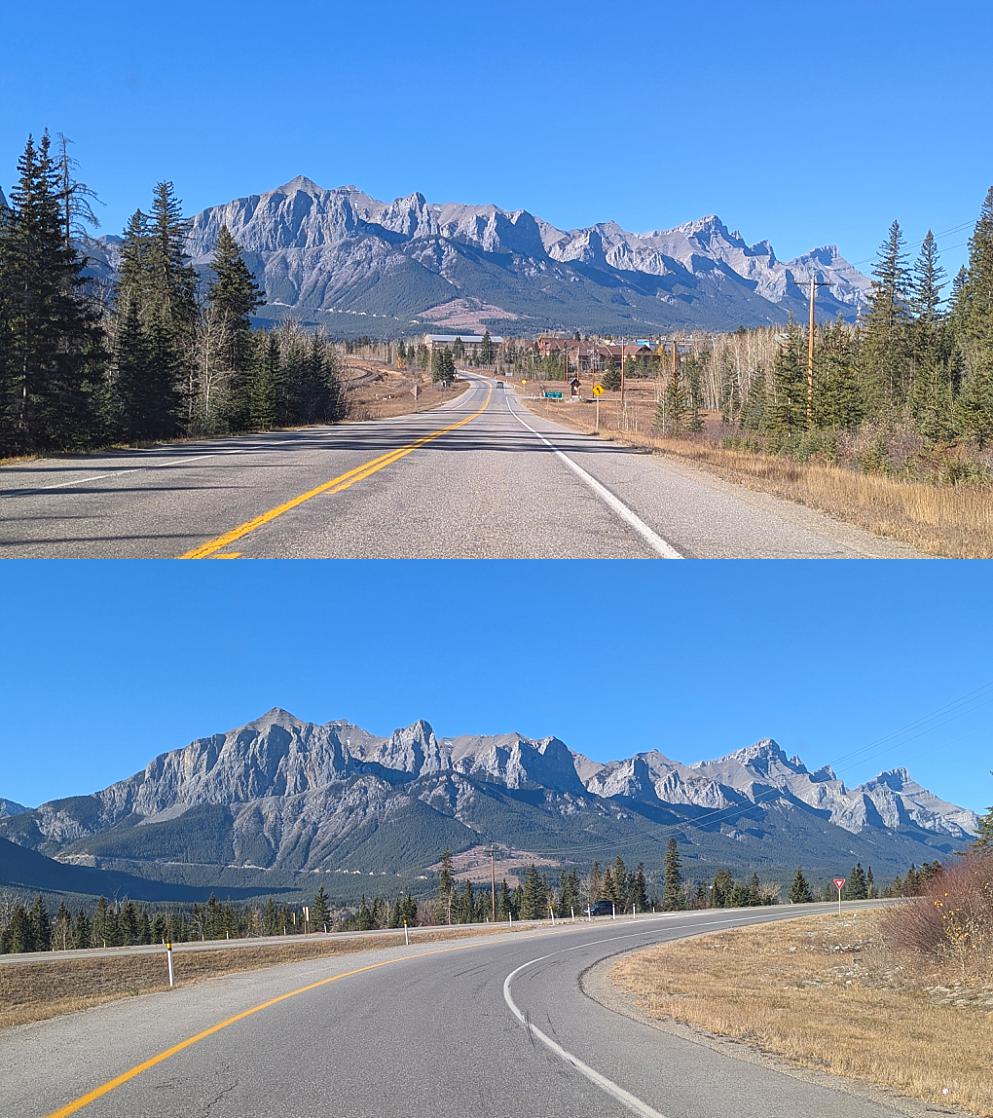
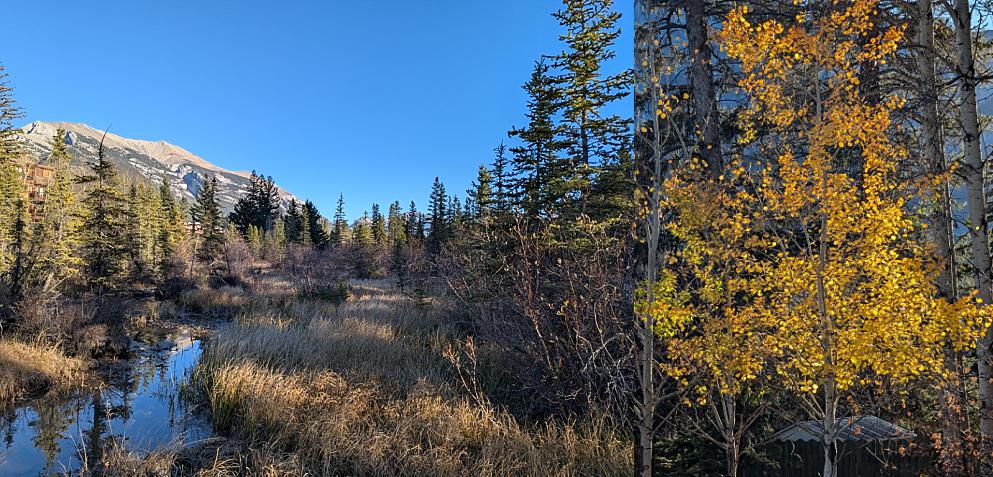
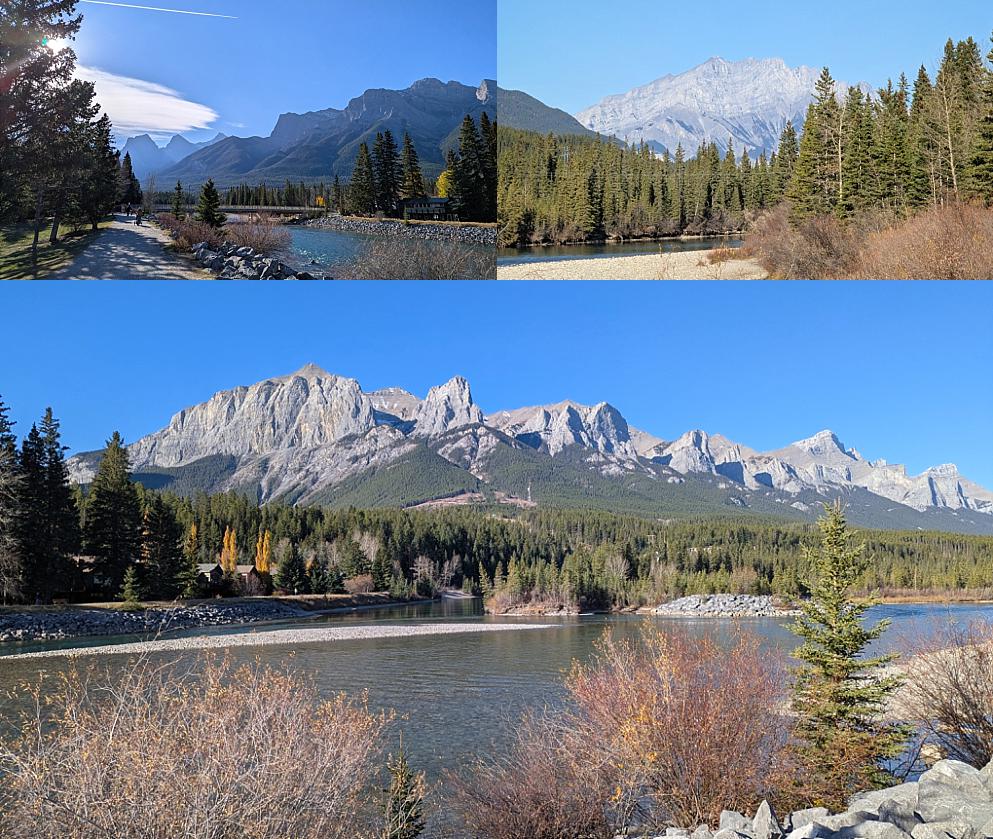
Yet in a very real sense the mountains I grew up with *aren’t* still there. The old ones were all Drop by anytime! Feel free to sit a spell! These new mountains are all Plan ahead! A lot! And keep moving, buddy! They have shuttles to take you into the special spots and crowds in all the spots.
And yet, it’s easy to overstate the transience of our world. Isaac Watts wrote his still-remembered hymn in 1708 (318 years ago); the Psalm he was inspired by was written before the Common Era (maybe even a few hundred years before, but certainly more than 2,000 years ago); and the mountain range I took photos of is generally agreed to be between 50 and 80 million years old (what’s 30 million years here or there?).
How does that poor clematis stack up by comparison? Not great, right? Well, it was categorized by Linnaeus in the 1700s but cultivated in Asia in the 1500s, and the AI overview (which might or might not have been able to actually access the cited-but-paywalled article) gives it a slightly longer pedigree:
The buttercup family (Ranunculaceae), which includes the Clematis genus, is estimated to have diverged roughly 87 to 73 million years ago (during the Late Cretaceous period), with some fossil evidence (such as Leefructus) pushing roots back around 125 million years.
That little clematis can be seen as being about as old as them thar hills.
Here today, and gone tomorrow?
Bah.
Here in ages past, and here today.
Melancholy, slight or otherwise, can go take a hike.